
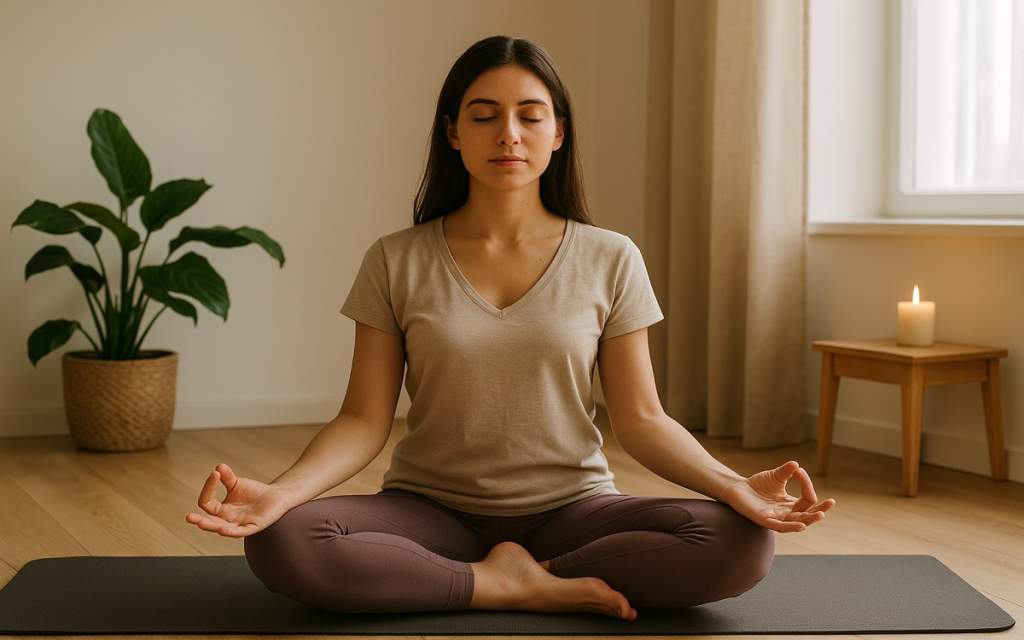
In today’s fast-paced and technology-driven world, our minds are constantly bombarded with information, expectations, and distractions. Anxiety, stress, and lack of focus have become common challenges in modern life. Amidst all this chaos, meditation has emerged as one of the most powerful tools to restore balance, clarity, and peace.
Meditation is not just a spiritual practice — it’s a science of mind training. It allows us to reconnect with our true self, calm the storm within, and cultivate awareness in every aspect of life. Whether you seek emotional healing, better health, or spiritual growth, meditation offers a path that leads inward — toward serenity and transformation.
🌸 What Is Meditation?
Meditation is an ancient practice of training the mind to focus, observe, and become aware without judgment. In Sanskrit, it is known as “Dhyana”, which means deep contemplation or absorption.
At its core, meditation involves directing your attention inward, observing thoughts and sensations, and gently returning to a chosen point of focus — like the breath, a mantra, or simply awareness itself.
It’s not about “stopping thoughts” but about changing your relationship with them — observing instead of reacting. Through regular practice, one learns to witness emotions, thoughts, and experiences with calm detachment.
🕉️ The History and Origins of Meditation
Meditation has been practiced for thousands of years across different cultures and spiritual traditions.
-
Ancient India: The earliest records of meditation come from the Vedic texts (around 1500 BCE), where it was an integral part of yoga and spiritual growth. Practices like Dhyana and Pranayama were designed to prepare the mind for self-realization.
-
Buddhism: Around 6th century BCE, Gautama Buddha taught meditation as the central path to enlightenment. Techniques like mindfulness (Vipassana) and concentration (Samatha) became core Buddhist practices.
-
China & Japan: Taoist and Zen traditions integrated meditation into their philosophy for harmony between body, mind, and nature.
-
Western World: Meditation gained popularity in the West during the 20th century, especially through mindfulness and Transcendental Meditation movements.
Today, meditation is a global practice — backed by neuroscience and psychology — used by millions for mental health, focus, and emotional healing.
🌿 How Meditation Works
Meditation may appear simple, but it profoundly transforms how our brain and body function. Let’s understand how it works:
-
Focus and Awareness: Meditation trains the mind to focus on the present moment. As we observe thoughts and sensations, we cultivate awareness and reduce mental distractions.
-
Neuroplasticity: Regular meditation changes brain structure and function. MRI scans show growth in areas responsible for memory, empathy, and emotional regulation, while the amygdala (linked with stress and fear) becomes less active.
-
Nervous System Balance: Meditation activates the parasympathetic nervous system, responsible for rest and relaxation, lowering heart rate and blood pressure.
-
Hormonal Regulation: It reduces cortisol (the stress hormone) and increases serotonin, dopamine, and endorphins — chemicals responsible for happiness and well-being.
-
Energy Flow: In yogic and spiritual traditions, meditation balances prana (life force) and activates energy centers (chakras), harmonizing body, mind, and spirit.
🌞 Benefits of Meditation
Meditation is not a one-time solution — it’s a lifelong practice that continually unfolds new levels of awareness and healing. Here are some scientifically and spiritually proven benefits:
1. Reduces Stress and Anxiety
Meditation helps calm the nervous system and lowers stress hormones. By observing thoughts without judgment, we stop feeding anxiety and start developing inner peace.
2. Improves Focus and Concentration
Practices like mindfulness and breath meditation enhance attention span and memory. Many professionals and students use meditation to boost productivity and creativity.
3. Enhances Emotional Well-Being
Meditation teaches emotional regulation. It helps manage anger, fear, and sadness while cultivating compassion, patience, and gratitude.
4. Promotes Better Sleep
Guided or mindfulness meditation before bedtime helps release tension and quiet the mind, reducing insomnia and restlessness.
5. Supports Physical Health
Studies show meditation strengthens the immune system, lowers blood pressure, and improves heart health. Some even report reduced chronic pain and inflammation.
6. Encourages Self-Awareness and Spiritual Growth
Beyond physical benefits, meditation deepens self-understanding. It helps you connect with your higher consciousness and realize your true nature — pure awareness beyond the ego.
🪷 Different Types of Meditation
There isn’t one single “right” way to meditate. Various traditions offer unique methods, each serving different purposes. Here are some of the most popular ones:
1. Mindfulness Meditation (Vipassana)
Originating from Buddhism, mindfulness meditation focuses on observing the present moment — thoughts, sensations, and emotions — without attachment or aversion. It develops awareness and equanimity.
2. Transcendental Meditation (TM)
A technique where practitioners silently repeat a specific mantra for 15–20 minutes twice daily. It allows the mind to settle into a state of restful alertness.
3. Guided Meditation
An instructor or audio guide leads you through visualization or relaxation exercises. Ideal for beginners, it helps in emotional healing, manifestation, or chakra balancing.
4. Breath Meditation (Anapanasati)
Focuses on observing the natural flow of breath — inhalation and exhalation. It enhances concentration and stillness.
5. Loving-Kindness Meditation (Metta Bhavana)
This Buddhist practice involves generating feelings of love and compassion for oneself and others, promoting forgiveness and empathy.
6. Chakra Meditation
Rooted in yogic philosophy, this technique involves focusing on energy centers (chakras) in the body, using breath, sound, or visualization to balance them.
7. Yoga Nidra (Yogic Sleep)
A guided practice of deep relaxation where the body sleeps but the mind remains aware. It’s known to relieve deep-rooted stress and rejuvenate energy.
8. Zen Meditation (Zazen)
A seated meditation practice from Zen Buddhism emphasizing posture, breath, and present-moment awareness. It aims at direct experience of reality.
🌼 How to Start Meditating (Step-by-Step for Beginners)
Starting meditation doesn’t require any special tools or place — only your willingness and consistency. Here’s a simple way to begin:
Step 1: Find a Quiet Space
Choose a peaceful corner where you won’t be disturbed. You can light a candle or use incense to create a calm atmosphere.
Step 2: Sit Comfortably
Sit cross-legged on the floor or on a chair with your spine straight. Keep your hands relaxed on your lap.
Step 3: Close Your Eyes and Breathe
Take a few deep breaths to settle your body. Let your breath flow naturally — don’t control it.
Step 4: Focus Your Attention
Pick a focal point — your breath, a mantra, or the space between your eyebrows. When your mind wanders (which it will), gently bring it back.
Step 5: Observe Without Judgment
Thoughts will arise — don’t resist them. Simply watch them pass, like clouds moving across the sky.
Step 6: End with Gratitude
After 10–15 minutes, slowly open your eyes. Take a moment to express gratitude for this time of stillness.
Start with 5 minutes daily and gradually increase to 20–30 minutes as you feel comfortable.
🌺 Common Challenges in Meditation
It’s normal to face difficulties when starting out. Here are a few common ones and how to overcome them:
| Challenge | Solution |
|---|---|
| Restless Mind | Don’t fight it. Simply return to your breath whenever you drift away. Consistency brings stillness. |
| Sleepiness | Sit upright with eyes slightly open or meditate early in the morning. |
| Body Pain | Use a cushion or chair for support; gentle yoga before meditation helps. |
| Lack of Time | Even 5 minutes daily can make a difference. It’s about quality, not duration. |
| Expectations | Don’t seek instant results. Let meditation unfold naturally. |
🌙 Best Time and Place to Meditate
-
Morning (Brahma Muhurta): The hours before sunrise are ideal for deep meditation. The mind is calm and energy fresh.
-
Evening: Meditating before bedtime helps release the day’s stress.
-
Nature: A quiet garden, near water, or under a tree enhances the experience.
-
Indoor Space: Choose a dedicated meditation corner with soft lighting and a calm vibe.
Regular timing and a peaceful environment signal your body and mind that it’s time to relax and go inward.
🔮 The Science of Meditation and Brain
Modern research has confirmed what ancient yogis knew for centuries — meditation literally reshapes the brain.
-
Increased Grey Matter: Long-term meditation increases grey matter in areas linked to learning, memory, and emotional control.
-
Reduced Amygdala Activity: The “fear center” of the brain becomes less reactive, leading to better stress management.
-
Stronger Prefrontal Cortex: This area, responsible for decision-making and focus, becomes more active and balanced.
-
Default Mode Network (DMN) Regulation: Meditation quiets the brain’s wandering network — the source of overthinking — leading to mental clarity.
Neuroscientists now recommend meditation as a complementary therapy for depression, anxiety, ADHD, and addiction recovery.
🌻 Meditation and Spiritual Awakening
While many approach meditation for relaxation, its deeper purpose lies in self-realization. As awareness expands, the illusion of separation fades, revealing the oneness of existence.
Regular meditation awakens Kundalini energy, aligns chakras, and connects you with universal consciousness. You begin to experience life from a state of flow, compassion, and intuitive wisdom.
This is what saints and mystics describe as “samadhi” — the state of ultimate stillness where the meditator, the act of meditation, and the object of meditation become one.
☯️ Tips for Deepening Your Practice
-
Be Consistent: Daily practice is more powerful than occasional long sessions.
-
Avoid Multitasking: Choose a fixed time and space free from interruptions.
-
Use Soft Background Music: Nature sounds or Tibetan bowls can help in relaxation.
-
Journal Your Experience: Write down feelings or insights after meditation.
-
Combine with Yoga or Pranayama: They prepare body and breath for deeper stillness.
-
Seek Guidance: Join a meditation group or follow a teacher for support.
🌼 Final Thoughts: Meditation as a Way of Life
Meditation is not something separate from daily living — it is a way of being. When practiced with sincerity, it brings mindfulness to every action — eating, walking, working, or speaking.
In time, you stop reacting to life’s ups and downs and start responding with awareness. You live with grace, gratitude, and purpose.
The outer world may remain the same, but your inner world transforms — silent, vast, and luminous. That is the true power of meditation.